The Biophilic Illumination: Circadian Lighting Systems in Ultra-Luxury Residences
How cutting-edge, custom-tuned photosynthetic and circadian lighting systems are integrated invisibly into brutalist architecture to regulate both the biological rhythms of high-net-worth inhabitants and the metabolic needs of monumental indoor flora.
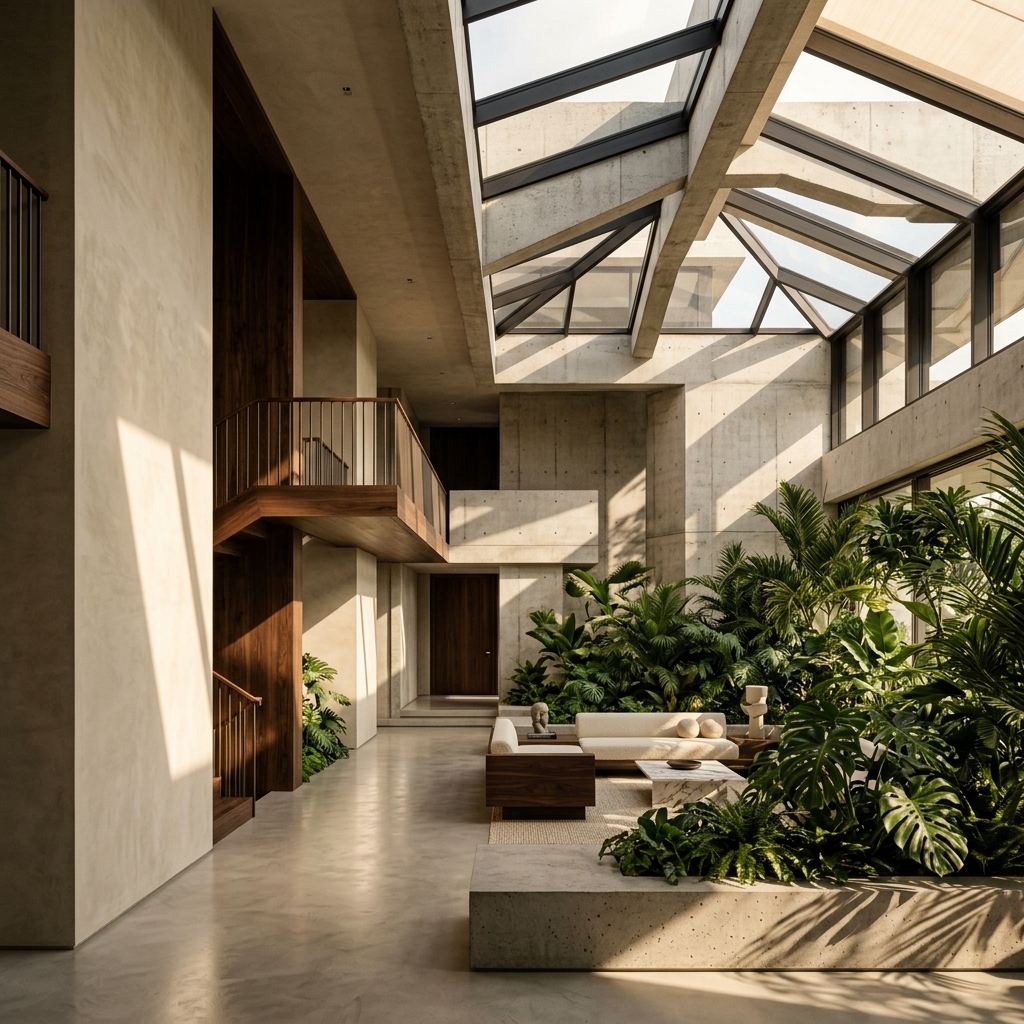
The frontier of elite interior design wellness has expanded far beyond superficial aesthetics and high-end finishes. In the hyper-competitive arena of ultra-luxury real estate, true architectural mastery is now defined by the unseen, the visceral, and the biological. At the apex of this paradigm shift lies the profound science of luxury circadian lighting. This is not merely the illumination of a space; it is the deliberate engineering of a domestic environment designed to actively regulate the autonomic nervous system and optimize the cognitive performance of its inhabitants. It is the realization that light, when wielded with academic precision, is the ultimate biological tool.
Within the highly exclusive registry of BiophilicHaus, we treat light not as an afterthought, but as a primary structural element—as crucial to the integrity of the home as load-bearing concrete. The human circadian rhythm, an intricate internal clock governed by the suprachiasmatic nucleus, is profoundly sensitive to the shifting spectrums and intensities of solar radiation. Yet, the modern elite are often insulated within impenetrable urban fortresses, entirely decoupled from these crucial environmental cues. This prolonged severance from natural light cycles leads to systemic physiological dysregulation, manifesting as chronic cortisol elevation, disrupted REM sleep, and compromised cognitive clarity.
To rectify this, we deploy advanced circadian lighting systems that are entirely invisible to the naked eye. These systems are embedded directly into the architectural fabric—recessed within seamless microcement ceilings or hidden behind floating walnut soffits. They do not merely 'turn on'; they breathe with the rotation of the earth. From the cool, hyper-oxygenating blue-enriched spectrums of early morning that suppress melatonin and stimulate hyper-focus, to the warm, amber-hued frequencies of dusk that signal the autonomic nervous system to enter a restorative, parasympathetic state, the home becomes an active participant in biological regulation.
The science underpinning this approach is irrefutable. Extensive research documented by leading medical authorities, such as the Nature Partner Journals, demonstrates that precise temporal exposure to specific light wavelengths is the most potent zeitgeber (time-giver) for human chronobiology. By meticulously mapping the solar path of a specific latitude and recreating it indoors with absolute chromatic fidelity, these biophilic architecture lighting installations eliminate the physiological jetlag inherent to modern executive lifestyles.
However, the complexity of these installations exponentially increases when we introduce monumental indoor flora—a non-negotiable hallmark of structural biophilia. When an ancient, multi-ton olive tree or a dense canopy of tropical ferns is permanently anchored into the slab of a brutalist living room, standard residential lighting is catastrophically insufficient. These complex living organisms demand exacting photosynthetic lighting spectrums (PAR—Photosynthetically Active Radiation) to sustain cellular respiration and thrive indoors.
This presents a profound engineering paradox: how does one deliver the aggressive, high-intensity wavelengths required for photosynthesis without subjecting the human inhabitants to an abrasive, clinical glare? The solution lies in unparalleled spatial geometry and multi-layered optical engineering. The artisans and lighting engineers within our registry utilize highly specialized lenses and custom-milled monolithic fixtures that focus the photosynthetic spectrums directly and exclusively onto the foliage. The light is captured by the canopy, creating a dramatic, luminous effect that casts intricate, fractal shadows across the raw concrete—a subtle nod to the neuro-architecture of luxury without ever polluting the ambient, circadian-tuned lighting intended for the human occupants.
This level of biophilic illumination requires an infrastructure of staggering complexity. We are not discussing off-the-shelf smart bulbs; we are describing hospital-grade, centralized control matrices driven by advanced algorithms. These systems constantly calculate the exact geographical coordinate, time of day, and precise weather patterns of the exterior environment to dynamically adjust the internal lighting matrix. The transition between spectrums must be so flawlessly smooth that it registers only on a subconscious, physiological level. Any perceptible 'jump' in color temperature shatters the illusion of natural immersion and betrays the presence of the machine.
Furthermore, the integration of these systems into the minimalist, brutalist aesthetic requires zero margin for error. The architecture must be designed around the lighting, not the inverse. A massive structural skylight, while breathtaking, introduces chaotic, uncontrolled solar gain that must be counterbalanced by the internal lighting matrix in real-time. When structural glass walls dissolve the boundary between the interior sanctuary and the exterior world, the artificial lighting must seamlessly match the color temperature of the twilight sky outside, effectively extending the horizon line into the living room.
The psychological impact of this orchestrated illumination is significantly amplified when paired with acoustic dampening strategies. As the lighting matrix transitions into the amber, low-intensity spectrums of the evening, the architecture itself must respond. The dense, hand-troweled finishes and monolithic concrete structures work in tandem to absorb the harsh high-frequency reverberations of the day. In this hushed, perfectly illuminated environment, the mind is stripped of external stimuli. The inhabitant is left only with the rhythmic, fractal shadows of the indoor canopy playing against the walls—a primal, hypnotic visual anchor that has been utilized by humanity since the dawn of civilization to induce states of deep meditation.
This holistic approach to spatial wellness completely redefines the concept of a home. It transforms the residence from a static shelter into an intelligent, responsive organism. For the elite buyer, whose daily existence is defined by relentless decision-making and cognitive overload, the home must serve as a frictionless environment. The lighting system, the climate control, the automated fertigation for the botanical installations—they must all operate with absolute, silent perfection. The luxury is entirely defined by its invisibility. The moment an inhabitant is forced to manually adjust a thermostat or dim a light switch, the illusion of the sanctuary is broken. True neuro-architecture anticipates the biological need before the conscious mind even recognizes it.
The financial commitment required to execute this level of neuro-architecture lighting systems is, by design, highly exclusionary. It requires the synchronization of electrical engineers, chronobiologists, and architectural lighting designers from the inception of the project. The custom fixtures, the subterranean server rooms required to house the processing units, and the endless calibration sessions demand a budget that rivals the structural foundation itself.
Yet, for the ultra-high-net-worth individual, this investment is completely decoupled from traditional real estate valuation. As noted in elite publications like Architectural Digest, the true luxury metric is no longer square footage or rare imported marble; it is the curation of an impenetrable personal sanctuary. It is the ability to walk through the front door, leave the chaotic frequencies of the global metropolis behind, and enter an environment that instantly, autonomously begins repairing cellular fatigue.
Ultimately, the implementation of luxury circadian lighting and precision photosynthetic arrays represents the zenith of structural biophilia. It transcends mere interior design, evolving into a form of active, preventative medicine. It is a profound declaration of sovereignty—the ultimate realization that true wealth is the absolute, uncompromising control over one's own biological reality.